How to Structure Your School for Maximum Efficiency and Profitability
Discover how Nigerian private schools can improve efficiency and profitability through better staff management, financial control, automation, and school management software.

How to Structure Your School for Maximum Efficiency and Profitability
Running a successful school requires more than excellent teaching. It requires a well-structured system that helps you manage staff, control expenses, improve academic performance, attract more students, and increase revenue.
For many private school owners in Nigeria, managing daily operations can be overwhelming. From tracking school fees and supervising teachers to preparing examination results, communicating with parents, and maintaining accurate records, administrative responsibilities can consume valuable time and resources.
The solution is not necessarily to work harder or employ more people. It is to build a school structure that makes every department, employee, and process work efficiently toward the same goals.
In this guide, you will discover how to structure your school for maximum efficiency and profitability, reduce unnecessary expenses, improve service delivery, and build a sustainable educational business.
EVERYTHING TO GROW YOUR SCHOOL IN ONE POWERFUL PLATFORM
1. Establish a Clear School Management Structure
A well-organized school begins with clearly defined roles and responsibilities. When everyone understands their duties, decision-making becomes faster, accountability improves, and confusion decreases.
Your school management structure may include:
- School Proprietor or Owner: Sets the school's vision, approves budgets, and monitors overall performance.
- School Administrator or Head Teacher: Supervises daily operations, coordinates staff, and ensures policies are implemented.
- Academic Coordinator: Monitors lesson delivery, curriculum coverage, assessments, and students' academic progress.
- Bursar or Accounts Officer: Manages school fees, expenses, financial records, and financial reporting.
- Teachers: Deliver lessons, assess students, record attendance, and communicate relevant concerns.
- Administrative and Support Staff: Handle admissions, records, communication, security, and facility maintenance.
The size of your school will determine how many positions you need. In smaller schools, one employee may perform multiple functions, provided responsibilities remain clear.
Pro tip: Create written job descriptions, measurable performance targets, and reporting procedures for every role. This reduces duplication of effort and makes staff performance easier to evaluate.
2. Digitize Your School's Administrative Processes
Manual record-keeping can slow down school operations and increase the risk of errors. Searching through paper files, calculating results manually, reconciling school fees, and preparing reports can take hours that could be spent improving teaching and learning.
Digital school management systems help schools automate repetitive tasks and keep important information organized.
With the right school management software, you can manage:
- Student admission and enrolment records.
- Staff information and attendance.
- School fees, invoices, receipts, and outstanding balances.
- Examination scores, report cards, and result analysis.
- Class attendance and parent notifications.
- Assignments, lessons, and computer-based tests.
- School-wide announcements and parent communication.
EVERYTHING TO GROW YOUR SCHOOL IN ONE POWERFUL PLATFORM
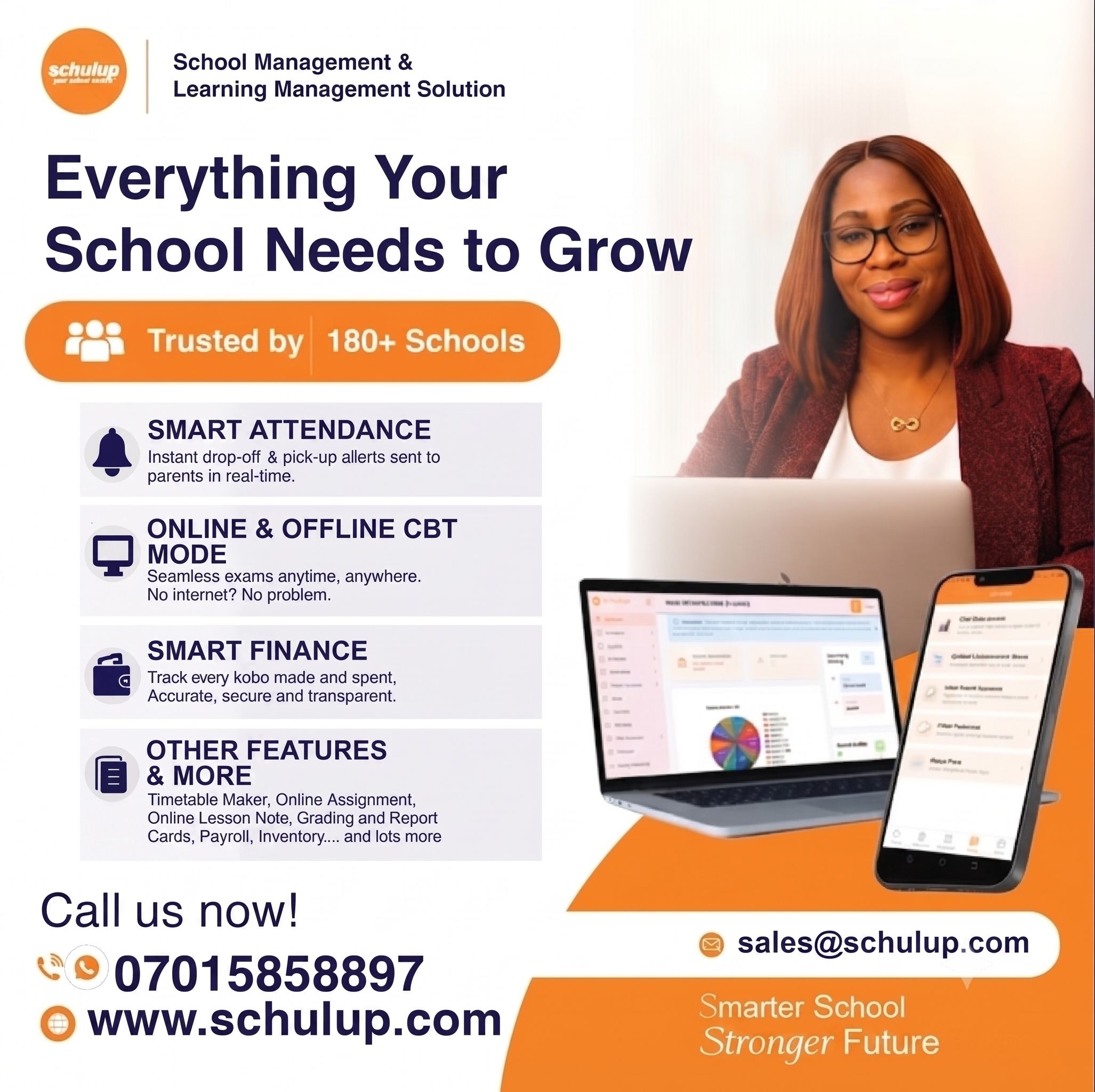
A platform such as SchulUp School Management Solution brings essential school management functions into one digital environment, helping school owners and administrators reduce administrative pressure and improve operational visibility.
Instead of depending on scattered spreadsheets, notebooks, and separate applications, your team can work with more organized information and consistent processes.
3. Put Your School Finances Under Control
A school can have many students and still struggle financially if fees are poorly tracked, expenses are uncontrolled, or financial reports are inaccurate.
To improve profitability, you must understand how much money enters the school, where it goes, and how much remains after expenses.
Start by implementing these practices:
Track every school fee payment. Maintain accurate records of invoices, payments, receipts, outstanding balances, and discounts.
Send timely payment reminders. Communicate politely with parents about outstanding fees before they accumulate into significant arrears.
Monitor operational expenses. Review spending on electricity, teaching materials, maintenance, printing, transportation, and other recurring costs.
Prepare monthly financial reports. Compare revenue against expenses and identify areas where costs can be reduced without compromising educational quality.
Separate school finances from personal finances. This makes budgeting, accountability, and business performance analysis easier.
Digital fee management tools can simplify payment tracking, automate receipts, and help administrators identify outstanding balances more quickly.
Remember, profitability does not simply mean collecting more money. It also means reducing waste, improving financial discipline, and using available resources wisely.
4. Build a Productive and Accountable Teaching Team
Teachers are central to your school's reputation. Parents expect their children to receive quality education, make academic progress, and learn in a supportive environment.
However, teachers cannot perform at their best when administrative duties consume most of their working time.
To improve teacher productivity:
- Develop clear lesson-planning and curriculum-delivery guidelines.
- Set realistic academic and professional performance targets.
- Organize regular teacher training and development.
- Use classroom observations and student assessments to monitor progress.
- Provide digital tools for preparing assignments, recording scores, and tracking attendance.
- Recognize excellent performance and address challenges constructively.
Avoid measuring teacher performance only by the number of hours spent at school. Consider lesson quality, student progress, classroom management, professional conduct, and feedback from relevant stakeholders.
When teachers spend less time on repetitive administrative work, they can devote more attention to instruction, student support, and academic improvement.
EVERYTHING TO GROW YOUR SCHOOL IN ONE POWERFUL PLATFORM
5. Improve Communication Between Your School and Parents
Poor communication can damage parents' trust, increase complaints, and contribute to student withdrawals.
Parents want to know how their children are performing academically, whether school fees are outstanding, when important activities are taking place, and whether their children are safe.
Create a reliable communication system that supports:
- Timely academic progress updates.
- School announcements and event reminders.
- Fee notifications and payment confirmations.
- Attendance alerts where supported.
- Direct channels for questions and complaints.
- Clear procedures for escalating urgent concerns.
Use approved communication channels and protect students' personal information. Ensure that messages reach the appropriate parent or guardian.
A school management platform such as SchulUp can help centralize relevant school information and make parent communication more organized.
Why does this matter for profitability? Parents who feel informed and respected are more likely to trust your school, recommend it to other families, and continue their children's education with you.
6. Use Data to Make Better School Management Decisions
Successful school owners do not rely entirely on assumptions. They monitor performance indicators and use the information to identify problems before they become expensive.
Your school should regularly review key performance indicators (KPIs), including:
- Student enrolment and new admissions.
- Student retention and withdrawal rates.
- Fee collection rate and outstanding balances.
- Monthly revenue and operating expenses.
- Teacher attendance and staff turnover.
- Student academic performance.
- Parent complaints and satisfaction.
- Cost per student and available classroom capacity.
For example, if enrolment is increasing but cash flow is worsening, you may need to investigate fee collection, staffing costs, or other operating expenses.
If many students are withdrawing, review parent feedback, academic performance, service quality, and competing schools' offerings.
School management software with reporting and analytics features can make it easier to review relevant information without manually compiling multiple records.
The goal is to make informed decisions that improve educational outcomes and financial sustainability.
EVERYTHING TO GROW YOUR SCHOOL IN ONE POWERFUL PLATFORM
7. Develop a Strong Student Recruitment and Retention Strategy
Profitability depends partly on your ability to attract suitable students and retain them from one academic session to the next.
A strong recruitment strategy should combine excellent educational delivery with effective marketing.
Improve your school's online visibility
Ensure your school has an accurate Google Business Profile, updated contact information, clear admission details, and a professional website where possible.
Publish useful content about your curriculum, facilities, learning activities, achievements, and admission process. Obtain genuine reviews from parents and respond professionally to feedback.
Create a positive parent experience
Make enquiries easy to handle. Respond promptly to prospective parents, explain your admission process clearly, and provide accurate information about fees and services.
Encourage referrals
Satisfied parents can become powerful advocates for your school. Encourage voluntary referrals through excellent service and a positive learning environment.
Monitor admission performance
Track how many enquiries become applications, how many applications become enrolments, and which marketing channels produce the best results.
Do not focus only on attracting new students. Retaining existing students can protect revenue and reduce the pressure to spend continuously on recruitment.

8. Standardize Daily School Operations
A school should not depend entirely on the proprietor being physically present every day. It needs reliable processes that enable work to continue even when the owner is unavailable.
Develop written procedures for routine activities such as:
- Student admission and registration.
- Morning assembly and attendance.
- Lesson planning and classroom supervision.
- Examination preparation and result processing.
- Fee collection and reconciliation.
- Parent complaints and incident reporting.
- Procurement and expense approval.
- Staff onboarding and performance reviews.
Each procedure should explain who is responsible, what steps to follow, the expected completion time, and how the outcome will be recorded.
Standard operating procedures (SOPs) improve consistency, reduce avoidable mistakes, and make it easier to train new employees.
Review these procedures periodically to identify outdated steps and opportunities for automation.
9. Reduce Costs Without Compromising Educational Quality
Cutting costs indiscriminately can damage your school's reputation and learning outcomes. The objective should be to eliminate waste while protecting the services that matter most.
Consider these practical strategies:
- Reduce unnecessary printing by digitizing suitable records and communications.
- Monitor electricity consumption and maintain equipment regularly.
- Plan procurement to avoid emergency purchases and wastage.
- Review subscriptions and eliminate unused digital tools.
- Use classroom capacity and staff schedules more efficiently.
- Monitor inventory and school supplies.
- Automate repetitive administrative work where financially worthwhile.
Before adopting any new technology, compare its subscription cost with the time, errors, and expenses it is expected to save.
The right investment should support measurable improvements in productivity, financial control, service delivery, or educational quality.
10. Choose the Right School Management Software
As your school grows, managing every activity manually becomes increasingly difficult. The right school management solution can connect essential processes and give school leaders better control over operations.
When evaluating a platform, consider the following features:
Feature Why It Matters
Student information management | Keeps student records organized and accessible to authorized users.
Fee and payment management | Improves payment tracking, receipts, and outstanding-balance monitoring.
Result processing and analytics | Reduces repetitive calculations and supports academic performance reviews.
Attendance management | Helps schools record attendance and communicate relevant alerts.
Parent communication | Makes announcements and student updates easier to coordinate.
Staff management | Supports staff records and other administrative workflows.
Assignments and CBT | Supports digital learning, assessments, and examination preparation.
Reports and dashboards | Helps management monitor important operational indicators.
Data security and backup | Helps protect school information and support continuity.
Before making a decision, request a demonstration, check the available features, understand the pricing, and confirm that the platform meets your school's needs.
EVERYTHING TO GROW YOUR SCHOOL IN ONE POWERFUL PLATFORM
Why Consider SchulUp School Management Solution?
SchulUp is designed to help schools manage important academic and administrative activities in a more organized digital environment.
Depending on the features available in your selected plan, SchulUp can support workflows such as student records, school fee management, automated result processing, attendance, assignments, computer-based testing, staff administration, and parent communication.
For school owners who want to reduce manual work, improve oversight, and create a more structured school environment, SchulUp is worth exploring.
Visit https://www.schulup.com/ to learn more, or request a demonstration at https://www.schulup.com/request-demo/ to assess how the platform fits your school's requirements.
EVERYTHING TO GROW YOUR SCHOOL IN ONE POWERFUL PLATFORM
11. Create a Practical School Improvement Plan
You do not need to transform every department at once. Start with the operational problems that consume the most time, create the greatest risks, or have the strongest impact on profitability.
Here is a practical 90-day plan.
Days 1–30: Assess and organize
- Review your management structure and staff responsibilities.
- Examine school fees, expenses, outstanding balances, and financial records.
- Identify administrative bottlenecks and repetitive tasks.
- Establish baseline performance indicators.
- Document the most important daily procedures.
Days 31–60: Implement improvements
- Introduce or improve digital record-keeping.
- Standardize fee collection and reporting.
- Train staff on their responsibilities and selected digital tools.
- Improve parent communication.
- Establish a consistent system for monitoring teaching and learning.
Days 61–90: Measure and optimize
- Compare performance with your original baseline.
- Review revenue, expenses, fee collection, and enrolment trends.
- Assess teacher productivity and parent feedback.
- Identify procedures that need improvement.
- Expand successful practices across other departments.
At the end of the 90 days, use the evidence collected to decide which improvements to retain, adjust, or expand.
Conclusion: Build a School That Works Smarter
Structuring your school for maximum efficiency and profitability requires a combination of clear leadership, accountable staff, sound financial management, effective communication, consistent processes, and appropriate technology.
When these elements work together, your school is better positioned to reduce administrative pressure, improve service delivery, strengthen parent confidence, and use its resources more effectively.
You do not have to manage everything manually or solve every problem by employing more people. Start by identifying the processes that need improvement, establish measurable goals, and introduce tools that support your school's growth.
Ready to manage your school more efficiently?
Explore SchulUp School Management Solution at https://www.schulup.com/ or request a personalized demo at https://start.schulup.com/.
Build a more organized school, empower your teachers, serve parents better, and create a stronger foundation for sustainable growth.
Frequently Asked Questions (FAQs)
1. How can I make my private school more profitable?
Improve fee collection, monitor operating expenses, retain students, strengthen admission processes, use staff and facilities efficiently, and track financial performance regularly.
2. What is the best way to manage a school efficiently?
Establish clear staff responsibilities, standardize daily procedures, maintain accurate records, monitor performance indicators, and use appropriate digital school management tools.
3. Why is school management software important?
School management software can help centralize records, simplify administrative processes, support fee tracking, streamline result processing, and improve communication between schools and parents.
4. How can technology reduce a school's operating costs?
Technology can reduce suitable printing and paperwork, automate repetitive tasks, improve financial visibility, and help staff spend less time on manual administration. Actual savings depend on implementation and usage.
5. What should I look for in school management software in Nigeria?
Consider affordability, ease of use, fee management, result processing, attendance, parent communication, reporting, data protection, reliable support, and suitability for your school's size and curriculum.
6. Is SchulUp suitable for private schools in Nigeria?
SchulUp is a school management platform that prospective users can evaluate against their school's academic and administrative needs. Request a demonstration to confirm the features, plan, and support available for your school.