CBT Preparation in Secondary Schools: Why Pencil-and-Paper Mocks Put Candidates at a Disadvantage
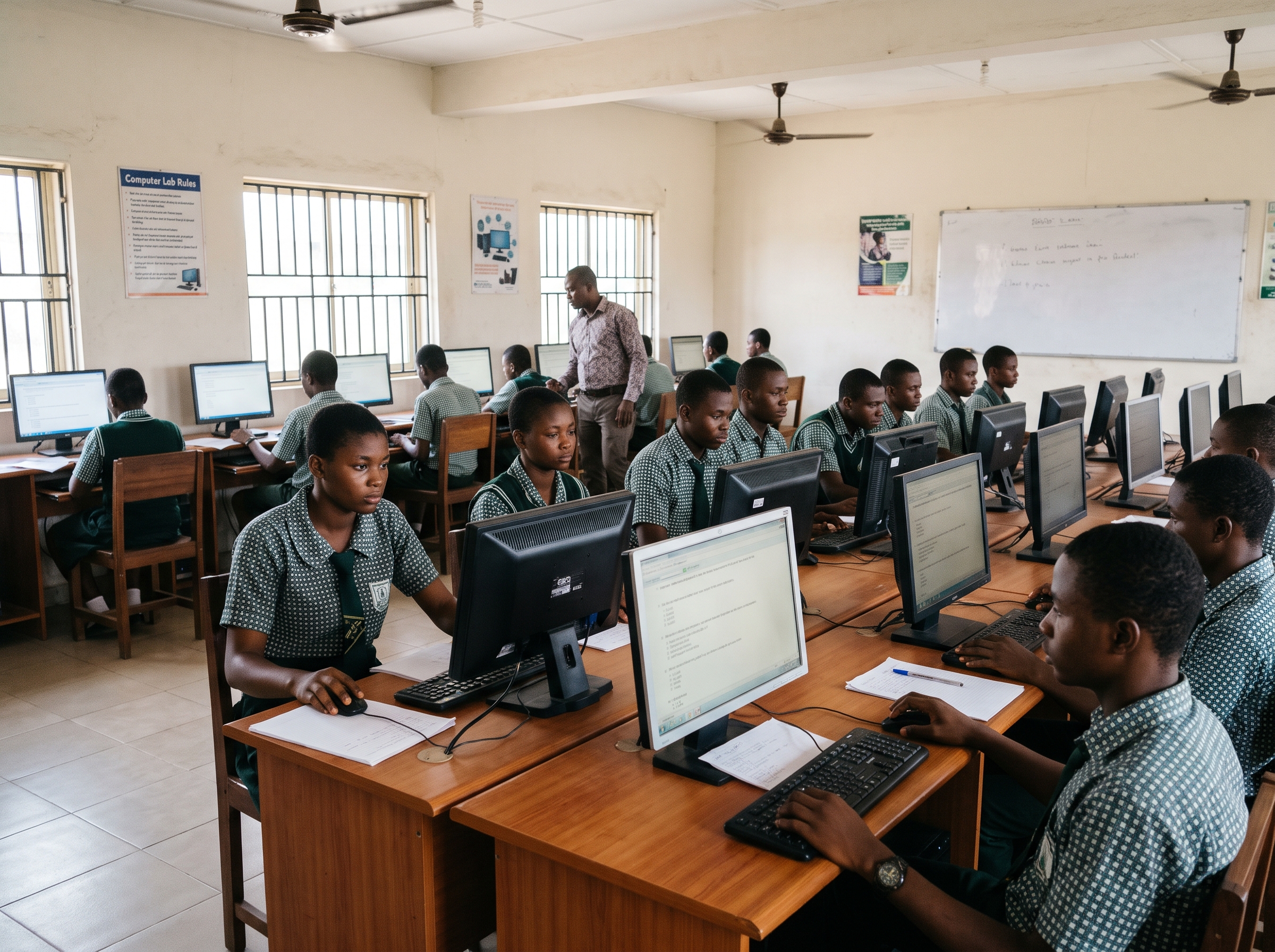
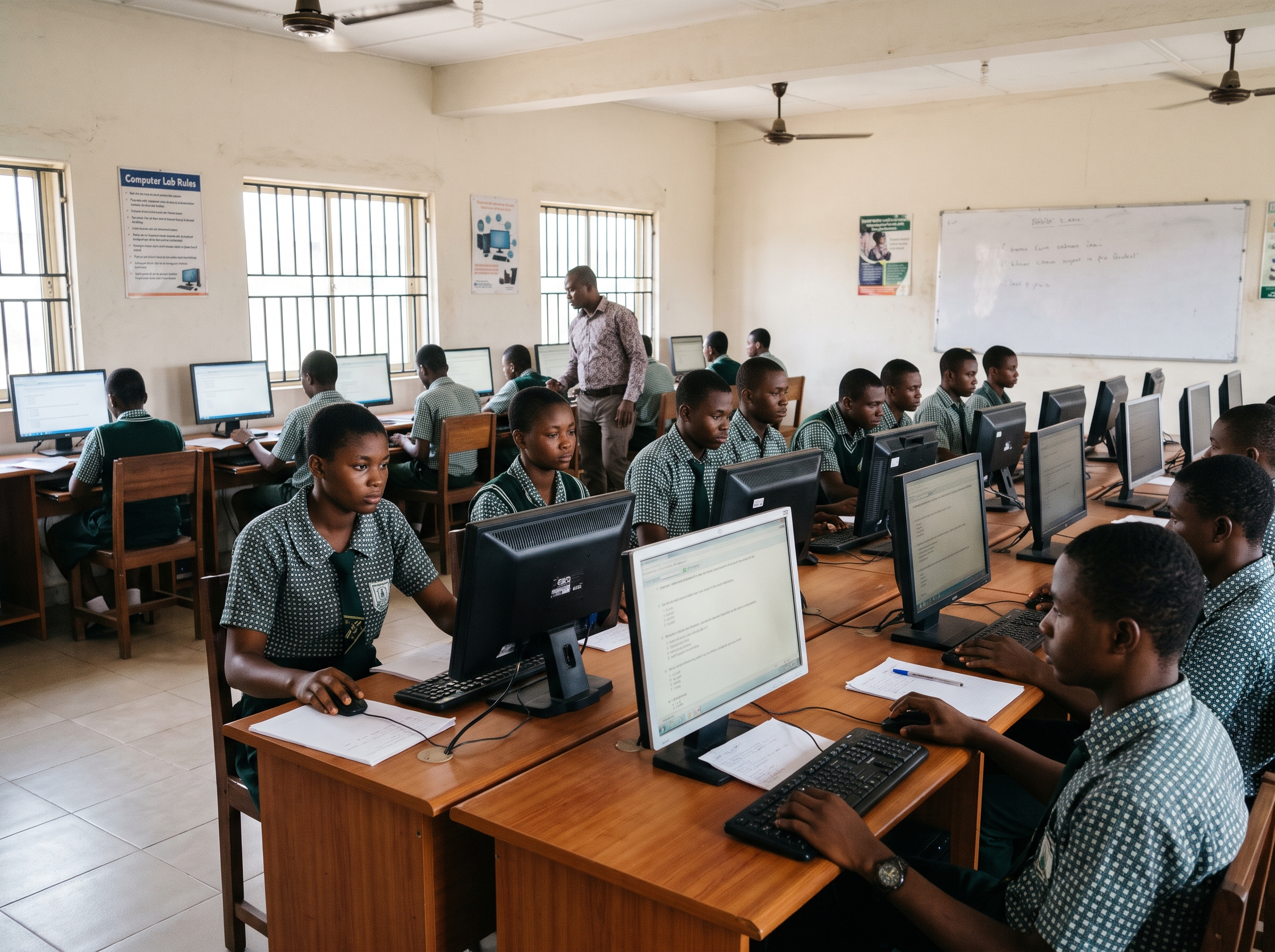
Picture Tunde, an SS3 student in Lagos. He tops his class in Mathematics and Physics, rarely drops marks in the school’s termly paper examinations, and his teachers expect strong results. Then his school runs its first computer-based practice test. Tunde spends the opening minutes working out how to move between questions, misses the on-screen countdown, and leaves several items unanswered. His knowledge has not changed. His environment has.
Introduction – The Changing Face of Secondary School Examinations
Picture Tunde, an SS3 student in Lagos. He tops his class in Mathematics and Physics, rarely drops marks in the school’s termly paper examinations, and his teachers expect strong results. Then his school runs its first computer-based practice test. Tunde spends the opening minutes working out how to move between questions, misses the on-screen countdown, and leaves several items unanswered. His knowledge has not changed. His environment has.
(Tunde is an illustrative example, but versions of his story play out in many schools.)
This is why CBT preparation in secondary schools has become one of the most practical conversations in Nigerian education. The Federal Ministry of Education has directed WAEC and NECO to move towards computer-based testing, and news reports show both bodies rolling out CBT formats in 2025 and 2026. The question for school owners and principals is no longer whether computer-based examinations are coming. It is whether your students will meet them for the first time on the day that matters most.
Computer-based testing (CBT) is an examination taken on a computer instead of on paper. Candidates log in, read questions on screen, select or type their answers, and watch a countdown timer. Answers are saved electronically, and objective questions can be marked automatically.
CBT matters for three reasons:
Speed: results for objective papers can be processed faster.
Credibility: examination bodies and government officials have said CBT supports exam integrity, for example through randomised questions.
Relevance: university entrance through JAMB has used CBT for years, and national examination bodies are now expanding it.
One caution before we go further. Not every Nigerian examination uses the same CBT format. Arrangements differ between examination bodies, between private and school candidates, and between objective and theory papers. Reports from 2026 also indicate that, in the WAEC school examination, many candidates still wrote on paper while more schools opted for CBT than before. Schools should always confirm current requirements directly with WAEC, NECO and JAMB.
Why Pencil-and-Paper Mock Examinations Are No Longer Enough
Paper mocks still teach students to revise, plan and write. But used alone, they leave gaps that only show up on a screen.
1. Students lack practical computer examination experience
Answering questions on a computer is a skill. Students who have never done it must learn the process while also recalling content. That extra mental load costs marks.
2. Poor time management during computer-based examinations
On paper, a student can glance across a whole booklet and decide where to spend time. On screen, questions appear one at a time and the timer is always visible. Without practice, candidates either rush or linger too long on early items.
Moving between questions, flagging items for review, changing answers and submitting correctly all need familiarity. A simple slip, such as submitting early, can be costly.
4. Examination anxiety and lack of confidence
An unfamiliar setting raises nervousness. A student who has practised in a similar environment walks in calmer than one seeing a screen-based exam for the first time.
5. Limited exposure to digital examination environments
Many students use phones daily but have little experience with a desktop or laptop exam. It helps to separate two ideas: computer literacy (being comfortable with computers generally) and CBT competence (performing well under timed, on-screen examination conditions). A student can have the first without the second, and only deliberate practice builds the second.
7 Reasons Secondary Schools Should Introduce Regular CBT Practice
Regular CBT practice for secondary school students delivers benefits well beyond examination day.
Builds students’ computer literacy. Each session strengthens basic skills such as typing, mouse control and screen navigation.
Improves examination confidence. Familiarity reduces fear. Students know what to expect before they arrive.
Develops effective time management. Students learn to pace themselves against a visible timer and to skip and return to difficult questions.
Familiarises students with CBT interfaces. Logging in, answering, reviewing and submitting become routine steps.
Helps identify students’ academic weaknesses. Digital results can show which topics a class or individual struggles with, so teachers can respond sooner.
Encourages independent learning. Students who get quick feedback can review mistakes and practise on their own.
Prepares students for technology-driven examinations. The move to digital assessment is not limited to secondary school. Skills built now carry into university and professional testing.
How Schools Can Effectively Approach CBT Preparation in Secondary Schools
Good CBT preparation in secondary schools does not need a huge budget on day one. It needs a plan and consistency.
Introduce weekly CBT practice. Short, regular sessions beat one big event. Even 30 to 40 minutes per class each week builds familiarity.
Organise computer-based mock examinations. Run full-length timed mocks each term for SS2 and SS3 so students experience a complete CBT sitting.
Train teachers to use CBT platforms. Teachers should be able to set questions, schedule tests and read results. Confident teachers make confident students.
Provide students with regular performance feedback. Share scores and corrections quickly while the questions are still fresh.
Analyse students’ examination results. Look for patterns by subject, topic and class, then adjust lessons accordingly.
Ensure access to functional computers and reliable power. Test your equipment before every session. Power backup and a stable setup matter, as some school proprietors have raised infrastructure concerns about CBT.
Gradually introduce students to timed digital examinations. Begin with untimed practice, move to short timed quizzes, then progress to full-length mocks.
A practical example: a school with one computer laboratory and several hundred senior students can rotate classes in small batches across the week. This is a realistic way to prepare secondary school students for CBT while the school grows its facilities.
The Role of Technology in Modern Secondary School Education
CBT is one part of a wider shift. Digital education platforms can support schools in several ways:
Teaching and learning: lesson materials and resources are available in one place.
Assignments: teachers can set, collect and review homework digitally.
Digital assessments: quizzes, tests and online mock examinations can be run regularly.
Automated grading: objective tests are marked quickly, freeing teachers for teaching.
Academic performance monitoring: progress can be tracked across terms and subjects.
Student engagement: interactive tools can make practice more appealing.
Data-driven academic decisions: principals can see where a school is strong and where support is needed.
Used well, digital learning in secondary schools is not about replacing teachers. It gives them better information and more time.
How Schulup School Management Helps Schools Embrace Digital Examination Preparation
Schulup is more than school management software. It is a technology partner that helps schools improve efficiency, academic performance and institutional growth. For schools working on CBT readiness, Schulup provides digital school management and learning capabilities, including:
Computer-Based Testing (CBT)
Digital assignments
Automated grading
Student performance analysis
Learning management capabilities
Academic monitoring tools
In practice, this means a school can bring CBT, assignments, grading and performance tracking into one connected system and make them part of its regular academic programme rather than a one-off event before external examinations. Teachers can then spend less time on manual marking and more time acting on what results show.
Every school is different, so the best way to judge fit is to see the platform in action. You can request a demo of Schulup and explore how its tools might work for your school.
Conclusion – The Future of Examination Preparation Is Digital
Subject knowledge will always be the foundation of academic excellence. But a student who knows the content and cannot comfortably navigate an on-screen examination is still at a disadvantage. Modern examination readiness needs both knowledge and digital competence.
For school owners and administrators, the encouraging news is that this gap can be closed with steady practice. Start with weekly CBT sessions. Add termly computer-based mocks. Train your teachers. Keep your paper assessments where they add value. Students who have practised in realistic conditions will meet their external examinations with confidence rather than surprise.
If you are ready to make CBT practice a regular part of your school’s academic life, SchulUp is ready to help.
CBT preparation in secondary schools means helping students practise taking tests on computers before they face real computer-based examinations. It covers on-screen navigation, time management, and answering questions under timed conditions, alongside normal subject revision.
2. Why should secondary school students practise CBT?
Practice reduces anxiety, builds speed and familiarity with the interface, and prevents avoidable mistakes. It also lets teachers spot weak topics early. Students who understand the format can focus on answering questions rather than on the screen.
3. Can pencil-and-paper mock examinations prepare students for CBT?
They can prepare students for the content, but not fully for the experience. Paper mocks do not teach on-screen navigation or pacing against a digital timer. Paper mocks remain useful, but they work best alongside CBT practice.
4. How often should secondary school students practise CBT?
There is no single rule, but regular short sessions work well. Weekly practice is a sensible starting point, with full-length computer-based mocks each term. Senior students approaching external examinations may benefit from more frequent sessions.
5. How can schools conduct CBT mock examinations?
Schools need computers with reliable power, a CBT platform, a question bank, trained teachers and clear invigilation rules. Start with short timed tests, move to full mocks, then review results with students. A digital platform such as SchulUp can help schools set tests, mark objective questions automatically and analyse results.
Holiday learning helps students retain knowledge, build new skills, and return to school more confident. Schools and parents can prevent learning loss by combining structured holiday assignments, practical activities, digital learning tools, and adequate time for rest. The goal is consistent learning without overwhelming children.
Nigerian school administrators are stuck between two demands that seem to pull in opposite directions: parents and regulators expect digital, e-learning-ready institutions, while unreliable networks, rising data costs, and inconsistent fee collection make that digitization genuinely hard to deliver.
The pattern shows up the same way in school after school. A proprietor invests in a school portal, and teachers can't upload results because the network is down.